SQL Server DBA + SQL Programming + Azure SQL Training (Online)
By Daniel AG, #1 Database Trainer in USA!!! (*****)
Course Description
Our Microsoft SQL Server DBA and SQL Programming course (both on-prem and Azure Cloud) is designed to provide a complete learning pathway for anyone seeking to master SQL Server in today’s hybrid data landscape. Whether you are an aspiring database professional starting fresh or an experienced IT specialist looking to upgrade your skills, this course offers the knowledge and hands-on expertise you need. No prior experience is required, making it accessible to beginners, while the depth of topics ensures value for seasoned professionals.
The program begins with a solid foundation in database concepts and SQL programming using Transact-SQL (T-SQL). From there, you will gain practical knowledge in installing and configuring SQL Server, managing day-to-day database administration tasks, and implementing high availability and disaster recovery strategies to ensure business continuity. The course also emphasizes performance monitoring and tuning, equipping you with the skills to maintain stable, secure, and efficient database systems.
As cloud adoption continues to reshape IT, we include a dedicated module on Azure SQL, where you will learn administration techniques unique to Microsoft’s cloud platform. You will also gain hands-on experience with database migration strategies, enabling you to confidently move workloads from on-premises SQL Servers to Azure SQL while maintaining performance and data integrity.
To enhance the quality of learning, every participant receives official Microsoft courseware, including Querying Data with Transact-SQL and Administering Microsoft SQL Server Databases. These materials align with Microsoft’s certification tracks and can serve as valuable references even after the training is completed.
With over a decade of experience training thousands of students across the USA, Canada, and beyond, we are proud to offer high-quality, affordable programs in SQL Server, Azure, AWS, AI, and related technologies. Based in Philadelphia, USA, our training combines structured teaching, real-world case studies, and practical labs to prepare you for real-life database management scenarios in both corporate and cloud environments.
For complete course details, schedules, and registration, please contact Daniel at +1 267 718 1533 (Mobile & Whatsapp).
Course Information
Daniel's Profile - #1 Database Trainer in USA!!!
Daniel brings over 16 years of experience in SQL Server Administration (on-premises and Azure), SQL Programming, business intelligence development (SSAS, SSIS, SSRS, Azure Fabric, Data Factory), data visualization (Power BI), and performance tuning. His cross-industry background gives him a unique perspective on how data design, data architecture, data management, security, and system architecture come together to deliver robust enterprise solutions.
He currently serves as a Data Architect in the healthcare industry near Philadelphia, USA, while also training and mentoring database professionals worldwide. Over the years, he has earned a reputation as one of the most trusted trainers in SQL Server, Azure Fabric, Data Engineering, Power BI, Microsoft AI, and related technologies.
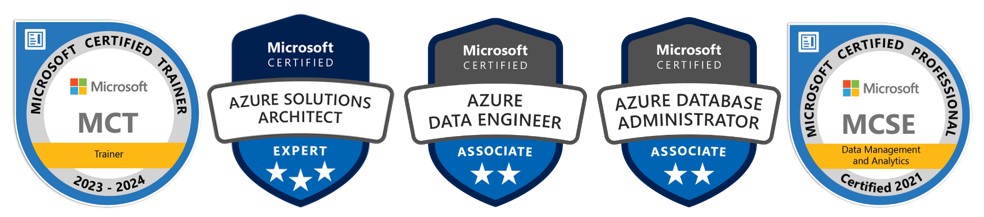
Microsoft recognizes Daniel’s expertise with the following certifications:- Microsoft Certified SQL Server DBA
- Microsoft Certified Azure Solutions Architect Expert
- Microsoft Certified Azure Data Engineer
- Microsoft Certified Trainer (MCT)
- MCSE in Data Management and Analytics
As a trainer, Daniel has mentored more than 3,000 students across the United States, Canada, and globally, helping professionals advance their careers in SQL Server, Azure, AWS, and AI. His teaching style blends real-world project experience with a structured, hands-on approach, making complex concepts easy to understand and immediately applicable.
Connect with Daniel at +1 267 718 1533 (Mobile & Whatsapp)
.Daniel's Technical Blog: https://empiredatasystems.com/blogs
Talk to Daniel
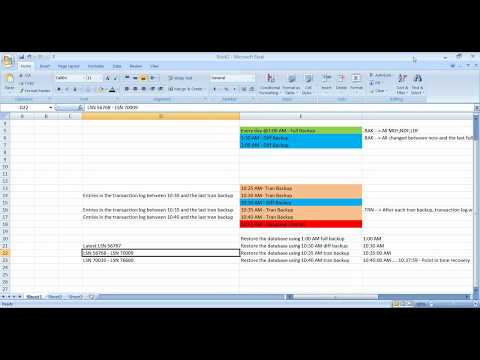
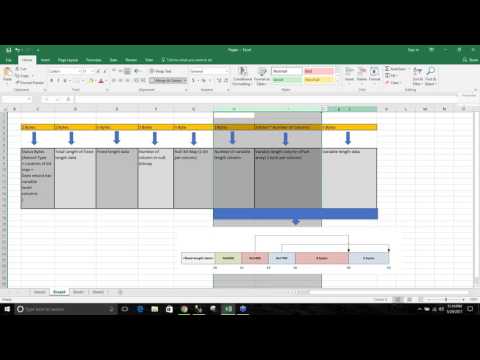
Live Training Videos
We believe in letting our prospective students to watch recorded videos of our live training classes and decide for themselves. If you would still like to attend a one-on-one live demo session, please give call Daniel @ 267 718 1533 and he can schedule one for you at your convenience.
Course Content
Part 1: SQL/TSQL Programming
RDBMS Concept
|
SQL Server Architecture
|
Creating schemas
|
Selecting appropriate data types
|
Adding constraints
|
Implementing various types of joins
|
Joining a table to itself
|
Combining queries with set operators
|
Scalar and Aggregate Functions
|
Summarizing data with aggregate functions
|
Grouping data
|
Extending group queries
|
Building crosstab reports
|
Declaring variables and parameters
|
Calling built-in scalar functions
|
Performing Extensive Analysis with Analytic Functions
|
RANK Function
|
Extending the use of aggregates
|
Building Sub-queries
|
Correlated sub-queries
|
Common table expressions (CTE)
|
PIVOT/UNPIVOT
|
Derived Tables
|
Maintaining Data
|
Transaction
|
SQL Server locking fundamentals
|
Programming procedural statements
|
Handling errors
|
Producing server-side result sets
|
Views
|
Functions
|
Triggers
|
Stored Procedures
|
Temporary Tables
|
Part 2: Database Administration
SQL Server Installation and Features
|
Storage Architecture & data redundancy
|
Essential tools
|
Creating and Managing Databases
|
Managing database space
|
Moving databases
|
Implementing Server and Database Security
|
Authorizing database access
|
Managing Permissions
|
Schemas
|
Catalog Information
|
Handling object-level permissions
|
Creating and managing indexes
|
Creating and managing Statistics
|
Transaction Log
|
System databases
|
Recovering from Disasters
|
Restoring databases
|
Export/Import data/database
|
Automating Tasks with Jobs and Alerts
|
Multistep jobs
|
Performing Database Maintenance
|
Ad hoc monitoring
|
Database Availably
|
SQL Server logs
|
Dead Locks
|
Latest Topics
|
Part 3: Performance Tuning
Executing queries
|
Performance tuning tools
|
Memory Management
|
L-L-W Issues
|
Lock Mode
|
Isolotion Level
|
Lock Granularity and Hierarchies
|
Analyzing performance using
|
Design effective SQL statements
|
Partitioning strategies for tables
|
Indexes tuning
|
Statistics Tuning
|
Part 4: Advanced DBA Topics
Advanced DBA Topics
|
Part 5: Azure SQL Infrastructure (Azure SQL + Managed Instance + Azure VM)
Azure SQL: Portfolio & setup
|
Azure SQL: Networking & access control
|
Azure SQL: Security deep dive
|
Azure SQL: Backup/restore & recovery
|
Azure SQL: HA/DR patterns
|
Azure SQL: Performance architecture & sizing
|
Azure SQL: Query performance & tuning
|
Azure SQL: Monitoring & automation
|
Azure SQL: Migration strategies
|
Azure SQL: DevOps & governance
|
Course Statistics
16
Years of Experience
3671
Gratified Students
112
Training Batches
9634
Training Hours
Gratified Student Feedback - From Year 2000
-
Daniel has excellent knowledge, very well explain on each topic. If any student didn't understand anything he was kind enough to explain it again. All I can say this is the best training I ever attended.
Course: SQL Server DBA/TSQL
Trainer: Daniel AG
Hemant Shah
Naperville, United States -
U the best Daniel.
Course: SQL Server DBA/TSQL
Trainer: Daniel
Eyuel
Warren, United States -
I really loved learning/taking the SQL Server DBA/TSQL course from Daniel. It was a great experience. He's very Thorough, professional, personable and very friendly. He has an Indepth subject knowledge in this field and would answer any question no matter how silly or tough it is...I would sincerely recommend him to anyone who is planning to take SQL Server course and could come back to him again if I need to take any other course in future. Thank you
Course: SQL Server DBA/TSQL
Trainer: Daniel AG
Sachindev Janardhan
Roswell, United States -
Daniel, Thanks for the wonderful training provided.
Course: SQL Server DBA/TSQL
Trainer: Daniel AG
Archana Malneni
Lexington, United States -
He is good and professional trainer.
Course: SQL Server DBA/TSQL
Trainer: Daniel AG
Mussie Berhane
Dallas, United States -
I took the training course on tsql + dba from you this summer, started in June and ended on august 30th. Just wanted to inform you that I have passed the exam for MS 70461. Really wanted to thank you for offering such a wonderful training course.
Course: SQL Server DBA/TSQL
Trainer: Daniel
Rohini Patel
Quakertown, United States -
Daniel continues to be excellent in your online teaching. He is a teacher who devotes a great amount of personal effort and interest to your regular teaching activities. His contributions to the first-time implementation of MSSQLServer 2016 update to this course contributed significantly. Above all, he remain open and receptive to comments and suggestions as to how your teaching can grow and improve. For me, EmpireData Systems provides gateway to make successful path in SQL DBA
Course: SQL Server DBA/TSQL
Trainer: Danial
Vik Patel
Bangalore, India -
It was an excellent training with great communication skills and comprehensive course material. Very good exercises and assignments. I learned a lot related to SQL Server.
Course: SQL Server DBA/TSQL
Trainer: Daniel AG
Neha Jain
Uniondale, United States -
Will recommend to everyone
Course: SQL Server DBA/TSQL
Trainer: Daniel
Prakash
Fort Collins, United States -
Good teacher and student relationships. Excellent teacher. Am happy I was in his class. Thanks Daniel
Course: SQL Server DBA/TSQL
Trainer: Ajagba's
Chioma
Buford, United States -
Due to the change on my work schedule I didn't attend some classes But the video records and worksheets which will be emailed for every student after the end of the class is very supportive and make me follow my class when ever its appropriate for me . I consider myself very lucky to be trained by Daniel, he is well educated,professional and patient. He is also perfect on his communication skill this helped to understand each and everything plus makes me more interested every time. I highly recommend Mr. Daniel's classes. thank you
Course: SQL Server DBA/TSQL
Trainer: Daniel AG
samrawit Chernet
Medford, United States -
Great mastery of the curriculum taught. Couldn't ask for more. The one thing I struggled with was the use of acronyms and abbreviations that are very strange to non IT background students. If a handout can be made with common acronyms and abbreviations in the IT field that will make the training perfect for students without an IT background. Nevertheless, f]great job Daniel. Will be referring many others to you. Many thanks.
Course: SQL Server DBA/TSQL
Trainer: Daniel
Stephan
Cambridge, United States -
Great Approach and great course
Course: SQL Server DBA/TSQL
Trainer: Daniel AG
Kareem Khalil
Richardson, United States -
Mr. Daniel is a very good teacher. His explanation technique is easy to understand. I wish him best of the luck.
Course: SQL Server DBA/TSQL
Trainer: Daniel AG
Raihan Hoque
Flushing, United States -
I heard you were the best trainer for SQL/DBA from my friend so i approached you and i completely agree with him and much more. You are the best.
Course: SQL Server DBA/TSQL
Trainer: Daniel
Praveen Reddy
Waco, United States -
Awesome Awesome Awesome Experience.I m so happy after attending this course. For Daniel: you are best trainer seriously.
Course: SQL Server DBA/TSQL
Trainer: Daniel Ag
Sonam Shah
East Newark, United States -
Daniel is very good trainer. The trainer is very detail oriented. All the questions asked during training and after training are answered in details.
Course: SQL Server DBA/TSQL
Trainer: Daniel
Bhumi Patel
High Point, United States -
I wish we didn't get to finish line of the course becouse I have never seen a teacher with Same tone,patient ,friendly,always wanting to explain ,ready to take students question,always willing to explain until students gets the point from start to finish of the course He is the number one teacher in SQL by far God bless you
Course: SQL Server DBA/TSQL
Trainer: Daniel Ag
Ablene Seyoum Gebretsadik
Elkridge, United States -
This is the first time I taking a class online for DBA course on SQL Server 2016 with Daniel AG, EmpireData Systems, the experience of getting training is unique to me. I am very pleased with the comprehensive course content and the way every topic is taught by Daniel AG. The instructor is highly experienced and very knowledgeable, provides training at a good pace, and most importantly, he is very good at communicating and ensuring all questions are answered. I would definitely recommend to others to take this course with Daniel AG and I hope I am going to attend more training classes with EmpireData Systems near future.
Course: SQL Server DBA/TSQL
Trainer: Daniel AG
Farzana Nazir
Bristow, United States -
This guy knows his stuff. I appreciate the willingness to spend extra time with students to help them out with their problems. Thank you
Course: SQL Server DBA/TSQL
Trainer: AG Daniel
Solomon Okhifoh
Red Deer, Canada -
I got an incredible knowledge of SQL Server DBA/TSQL with in this short period of time.Thanks my instructor you are gifted and hard worker who can be model for others too.
Course: SQL Server DBA/TSQL
Trainer: Mr.Daniel Ag.
Zertihun Wodajo
Circle Pines, United States -
.
Course: SQL Server DBA/TSQL
Trainer: DANIEL
DOLAPO ODUSAMI
Jonesboro, United States -
It was awesome experience during Daniel's Training. He is very friendly with all students. I was really impress that he was helping us in every tiny problems. He also answer our questions anytime on phone and also extend sessions to explain briefly whenever we needed. He never hesitate to explain any issues repeatedly. He covered every topics for SQL server/DBA training.
Course: SQL Server DBA/TSQL
Trainer: Daniel AG
Khushbu Shah
Sugar Land, United States -
Daniel is very good teacher, he is friendly and easy to talk to. He knew what is is teaching and well organized. I am glad I took his class. I just want to say Thank you!
Course: SQL Server DBA/TSQL
Trainer: Daniel AG
zelalem Mekonnen
Fairfax, United States -
Daniel knows his material well and also well organized. He made learning SQL server interesting.
Course: SQL Server DBA/TSQL
Trainer: Daniel
Devin
Hicksville, United States