SQL Server DBA + SQL Programming + Azure SQL Training (Online)
By Daniel AG, #1 Database Trainer in USA!!! (*****)
Course Description
Our Microsoft SQL Server DBA and SQL Programming course (both on-prem and Azure Cloud) is designed to provide a complete learning pathway for anyone seeking to master SQL Server in today’s hybrid data landscape. Whether you are an aspiring database professional starting fresh or an experienced IT specialist looking to upgrade your skills, this course offers the knowledge and hands-on expertise you need. No prior experience is required, making it accessible to beginners, while the depth of topics ensures value for seasoned professionals.
The program begins with a solid foundation in database concepts and SQL programming using Transact-SQL (T-SQL). From there, you will gain practical knowledge in installing and configuring SQL Server, managing day-to-day database administration tasks, and implementing high availability and disaster recovery strategies to ensure business continuity. The course also emphasizes performance monitoring and tuning, equipping you with the skills to maintain stable, secure, and efficient database systems.
As cloud adoption continues to reshape IT, we include a dedicated module on Azure SQL, where you will learn administration techniques unique to Microsoft’s cloud platform. You will also gain hands-on experience with database migration strategies, enabling you to confidently move workloads from on-premises SQL Servers to Azure SQL while maintaining performance and data integrity.
To enhance the quality of learning, every participant receives official Microsoft courseware, including Querying Data with Transact-SQL and Administering Microsoft SQL Server Databases. These materials align with Microsoft’s certification tracks and can serve as valuable references even after the training is completed.
With over a decade of experience training thousands of students across the USA, Canada, and beyond, we are proud to offer high-quality, affordable programs in SQL Server, Azure, AWS, AI, and related technologies. Based in Philadelphia, USA, our training combines structured teaching, real-world case studies, and practical labs to prepare you for real-life database management scenarios in both corporate and cloud environments.
For complete course details, schedules, and registration, please contact Daniel at +1 267 718 1533 (Mobile & Whatsapp).
Course Information
Daniel's Profile - #1 Database Trainer in USA!!!
Daniel brings over 16 years of experience in SQL Server Administration (on-premises and Azure), SQL Programming, business intelligence development (SSAS, SSIS, SSRS, Azure Fabric, Data Factory), data visualization (Power BI), and performance tuning. His cross-industry background gives him a unique perspective on how data design, data architecture, data management, security, and system architecture come together to deliver robust enterprise solutions.
He currently serves as a Data Architect in the healthcare industry near Philadelphia, USA, while also training and mentoring database professionals worldwide. Over the years, he has earned a reputation as one of the most trusted trainers in SQL Server, Azure Fabric, Data Engineering, Power BI, Microsoft AI, and related technologies.
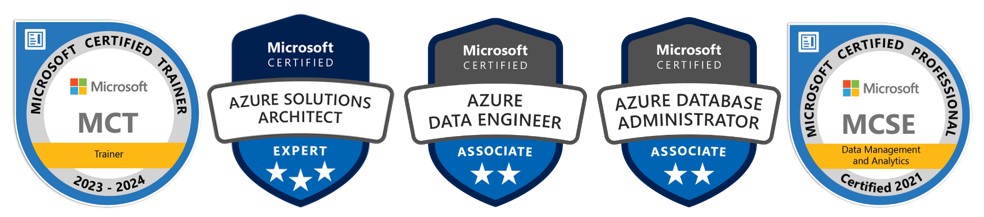
Microsoft recognizes Daniel’s expertise with the following certifications:- Microsoft Certified SQL Server DBA
- Microsoft Certified Azure Solutions Architect Expert
- Microsoft Certified Azure Data Engineer
- Microsoft Certified Trainer (MCT)
- MCSE in Data Management and Analytics
As a trainer, Daniel has mentored more than 3,000 students across the United States, Canada, and globally, helping professionals advance their careers in SQL Server, Azure, AWS, and AI. His teaching style blends real-world project experience with a structured, hands-on approach, making complex concepts easy to understand and immediately applicable.
Connect with Daniel at +1 267 718 1533 (Mobile & Whatsapp)
.Daniel's Technical Blog: https://empiredatasystems.com/blogs
Talk to Daniel
Live Training Videos
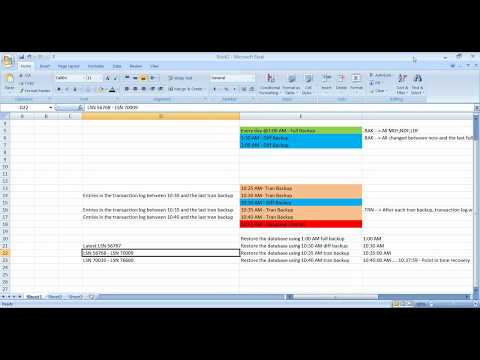
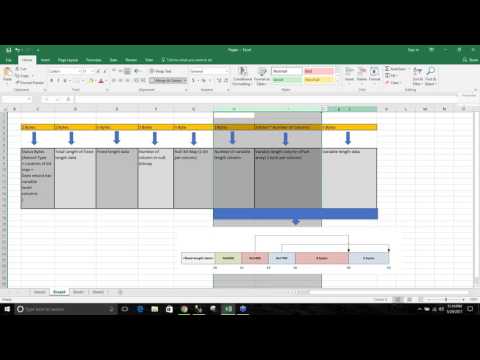
We believe in letting our prospective students to watch recorded videos of our live training classes and decide for themselves. If you would still like to attend a one-on-one live demo session, please give call Daniel @ 267 718 1533 and he can schedule one for you at your convenience.
Course Content
Part 1: SQL/TSQL Programming
RDBMS Concept
|
SQL Server Architecture
|
Creating schemas
|
Selecting appropriate data types
|
Adding constraints
|
Implementing various types of joins
|
Joining a table to itself
|
Combining queries with set operators
|
Scalar and Aggregate Functions
|
Summarizing data with aggregate functions
|
Grouping data
|
Extending group queries
|
Building crosstab reports
|
Declaring variables and parameters
|
Calling built-in scalar functions
|
Performing Extensive Analysis with Analytic Functions
|
RANK Function
|
Extending the use of aggregates
|
Building Sub-queries
|
Correlated sub-queries
|
Common table expressions (CTE)
|
PIVOT/UNPIVOT
|
Derived Tables
|
Maintaining Data
|
Transaction
|
SQL Server locking fundamentals
|
Programming procedural statements
|
Handling errors
|
Producing server-side result sets
|
Views
|
Functions
|
Triggers
|
Stored Procedures
|
Temporary Tables
|
Part 2: Database Administration
SQL Server Installation and Features
|
Storage Architecture & data redundancy
|
Essential tools
|
Creating and Managing Databases
|
Managing database space
|
Moving databases
|
Implementing Server and Database Security
|
Authorizing database access
|
Managing Permissions
|
Schemas
|
Catalog Information
|
Handling object-level permissions
|
Creating and managing indexes
|
Creating and managing Statistics
|
Transaction Log
|
System databases
|
Recovering from Disasters
|
Restoring databases
|
Export/Import data/database
|
Automating Tasks with Jobs and Alerts
|
Multistep jobs
|
Performing Database Maintenance
|
Ad hoc monitoring
|
Database Availably
|
SQL Server logs
|
Dead Locks
|
Latest Topics
|
Part 3: Performance Tuning
Executing queries
|
Performance tuning tools
|
Memory Management
|
L-L-W Issues
|
Lock Mode
|
Isolotion Level
|
Lock Granularity and Hierarchies
|
Analyzing performance using
|
Design effective SQL statements
|
Partitioning strategies for tables
|
Indexes tuning
|
Statistics Tuning
|
Part 4: Advanced DBA Topics
Advanced DBA Topics
|
Part 5: Azure SQL Infrastructure (Azure SQL + Managed Instance + Azure VM)
Azure SQL: Portfolio & setup
|
Azure SQL: Networking & access control
|
Azure SQL: Security deep dive
|
Azure SQL: Backup/restore & recovery
|
Azure SQL: HA/DR patterns
|
Azure SQL: Performance architecture & sizing
|
Azure SQL: Query performance & tuning
|
Azure SQL: Monitoring & automation
|
Azure SQL: Migration strategies
|
Azure SQL: DevOps & governance
|
Course Statistics
16
Years of Experience
3671
Gratified Students
112
Training Batches
9634
Training Hours
Gratified Student Feedback - From Year 2000
-
The information presented was current and helpful. I really enjoyed the fact that I was able to access the trainings anytime with ease. You will not regret it and I will be looking to sit for the exam shortly.
Course: SQL Server DBA/TSQL
Trainer: Daniel AG
Yurina Page
Altoona, United States -
Due to change of my work schedule I didn’t attend most of the classes but video and materials he provided were enough to understand concepts. I would recommend his all classes. His efforts and willingness towards students are great. Great teacher!!!
Course: SQL Server DBA/TSQL
Trainer: Daniel AG
Mitul Patel
Trenton, United States -
The class is fast and intense but Daniel makes it so easy by how he explains everything and answers the students questions.He's very patient and understanding.I highly recommend him. Look no further ,get trained by the master Daniel.
Course: SQL Server DBA/TSQL
Trainer: Daniel Ag
Serah Mathis
Dallas, United States -
I would recommend Daniel AG’s SQL Server DBA/TSQL course. Daniel takes the time to explain the concepts until they are clearly understood and provides additional material that can be used for review after the classes. He also makes himself available to students for questions and is very informative. I highly recommend this class.
Course: SQL Server DBA/TSQL
Trainer: Daniel AG
Christine Mwangi Butt
McKinney, United States -
Hello, Thank you Daniel for creating this course. It was a good resource. The course material is very dense and there is so much material to cover. I enjoyed the course. You were very helpful and are a good teacher. Thank you, Patricia
Course: SQL Server DBA/TSQL
Trainer: Daniel AG
Patricia Sula
Rockville, United States -
Very detailed lectures. Great value for the money I spent on training.
Course: SQL Server DBA/TSQL
Trainer: Daniel AG
Jamal Mathis
Dallas, United States -
Excellent way of teaching and Daniel has really good knowledge in SQL Server.
Course: SQL Server DBA/TSQL
Trainer: Daniel AG
Nasrin Frough
Lewisville, United States -
Fantastic SQL Server 2017 DBA training by Daniel !!!!
Course: SQL Server DBA/TSQL
Trainer: DANIEL
OLUWASEUN TOPE OYERO
Atlanta, United States -
Daniel is knowledgeable and gives a lot of insight in the working field.
Course: SQL Server DBA/TSQL
Trainer: Daniel G
Ty Hak
Jacksonville, United States -
Daniel has Expertise knowledge in SQL Server in both T-SQL Querying and DBA as well. Teaches what are the necessary topics for beginners and clarifies the doubts very well when a student raise a question. Very experienced DBA and Trainer. I refer all my friends who arr looking for DBA as career to take course with Daniel.
Course: SQL Server DBA/TSQL
Trainer: Daniel AG
Akshay Kumar Punna
Las Vegas, United States -
Mr. Daniel is a very exceptional instructor. I didn't know much about DB at first so when I went on with the course, I was able to understand it well. He supports us, encourages us to ask questions and explain what the answer is so that we can understand it. I would definitely recommend this course with him since he is very patient when he teaches.
Course: SQL Server DBA/TSQL
Trainer: Daniel AG
Mahlet Keraga
Charlotte, United States -
I really enjoyed this course even though I did not have any knowledge of SQL Server Database. Daniel was knowledgeable of the material and was willing to help his students. I would strongly recommend Daniel as an instructor to those who want to take this course.
Course: SQL Server DBA/TSQL
Trainer: Daniel AG
Chantal Tewo-Nsombo
Temple, United States -
This class is great! Very in depth training and the videos and other class documentation are great tools to use during and after class.
Course: SQL Server DBA/TSQL
Trainer: Daniel Ag
Ashlee Gonzalez
Fremont, United States -
The training was very helpful. Daniel has very good knowledge of the subject matters. As per training I will give him 5 Star.
Course: SQL Server DBA/TSQL
Trainer: Daniel
Syed Ali
New York City, United States -
It was very nice class, its my first online class experience I didn't expect this much beautiful, I gate a lot knowledge and experience. Daniel is a great teacher and nice person too, generally this online course changed my personal lass expectation about online class to positively. I am happy thanks more.
Course: SQL Server DBA/TSQL
Trainer: Daniel AG
Nebiyu G Kifle
Boise, United States -
Daniel is a great Instructor. I realized that he has all the required knowledge of the field. More importantly, he has a great personality & heart to help all his students. Very courageous & patient. One can easily tell he has a high level of professional commitment on top of his knowledge. I thoroughly enjoyed the entire training. I highly recommend him to anyone interested, whether new to the field or had some past experience & wanted to further broaden their knowledge.
Course: SQL Server DBA/TSQL
Trainer: Daniel AG
Baheru Muluneh
Seattle, United States -
Daniel is a great instructor and very knowledgeable in SQL Server
Course: SQL Server DBA/TSQL
Trainer: Daniel
Marvin Mensah
Manassas, United States -
Daniel is a great instructor. He takes his time to teach, he makes sure everyone is following and he answers any questions you may have to satisfaction. At the beginning of class, I remembered he said any question is a good question, and he sure did prove it by answering all questions asked . Thanks Daniel. I enjoyed every bit of your class.
Course: SQL Server DBA/TSQL
Trainer: DANIEL AG
OMOBOLAJI 0. ONONUGA
Charlotte, United States -
The topics covered where relevant to me.The training materials provided was very helpful.The trainer was knowledgeable and highly skilled. I highly recommend this training.
Course: SQL Server DBA/TSQL
Trainer: Daniel
Temesgen L Abalti
Arlington, United States -
I really enjoyed the training. He is very patient and always encourages his students to ask questions. I would recommend anyone who wants to become a DBA.
Course: SQL Server DBA/TSQL
Trainer: Daniel
Bruck Assefa
Long Beach, United States -
It has been a great opportunity to get knowledge even for someone who had no previous experience on the field. I highly recommend it.
Course: SQL Server DBA/TSQL
Trainer: Daniel
Meheret Keraga
Tupelo, United States -
I like the way to explain! Very good SQL Server 2017 DBA training.
Course: SQL Server DBA/TSQL
Trainer: Daniell
Tameru Kejela
Columbus, United States -
Excellent coaching... student discussions, the class materials are really helpful. Thank you Daniel for your training and all your help.
Course: SQL Server DBA/TSQL
Trainer: Daniel A G
Siby Toy
Cerritos, United States -
Thank you so much for making my experience on SQL SERVER DBA wonderful!!! You are a great instructor and I’m going to miss your class. Thank you again for interacting the class and explain all the material/topics really well. You always make sure we understood your explanation. I will definitely continue recommending your class for others with out any doubt. Excellent, keep up the good work!!
Course: SQL Server DBA/TSQL
Trainer: Daniel
Konget Mengistu
Cambridge, United States -
Excellent training!
Course: SQL Server DBA/TSQL
Trainer: Daniel
Biniyam
Burbank, United States